
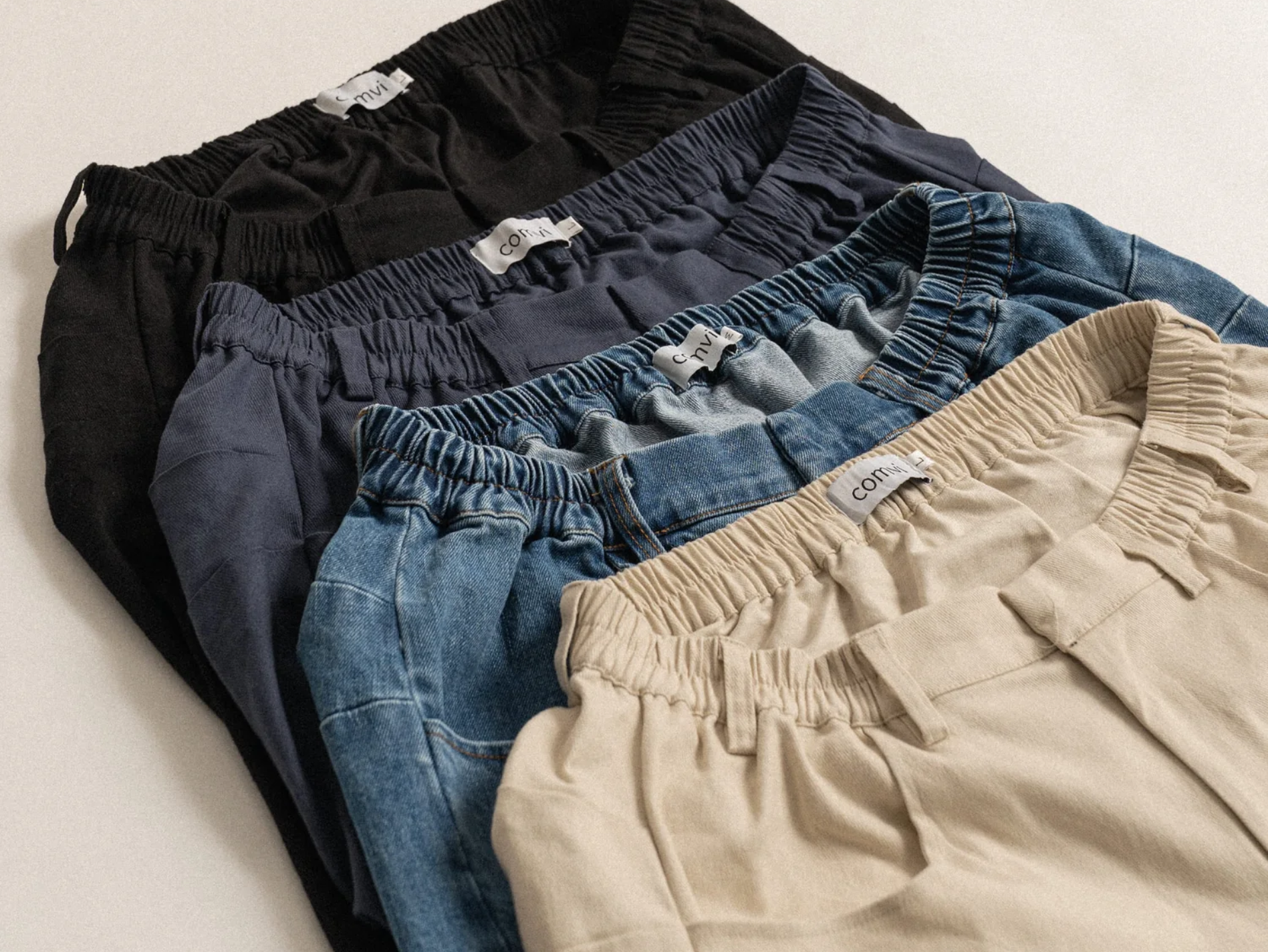
Meet Comvi: blending accessibility and fashion
Finding a good pair of pants can be a frustrating process, but when you finally find those perfect oh-so-comfortable pants, it’s all worth it.
But finding a good pair of pants that are fashionable and accessible? For many people with disabilities, it is literally life changing. That’s what WA company Comvi and its founder Lachlan set out to do; help people with disabilities find clothes that are fashionable, adaptive, and give them confidence.
Lachlan never intended on going into the fashion industry – in his late 20s, he’s a chill, laid-back kind of guy, whose fashion sense tends to favour white t-shirts and plain pants.
He’s also a C4/5 level quadriplegic and has been using a wheelchair for twelve years. During this time, he’s tried every pair of accessible clothes he could get his hands on. “I’ve bought a lot of adaptive clothing before, from all around the world,” Lachlan said, “And there were little features that I liked from them, little bit of something about them that worked, and a little that didn’t...and then there were others that I absolutely hated.”
Frustrated, and sick of buying clothes that didn’t work for him, Lachlan decided to take matters into his own hands. He spoke to his friend, a fashion designer, and together, they decided to design pants that were both adaptive and fashionable.
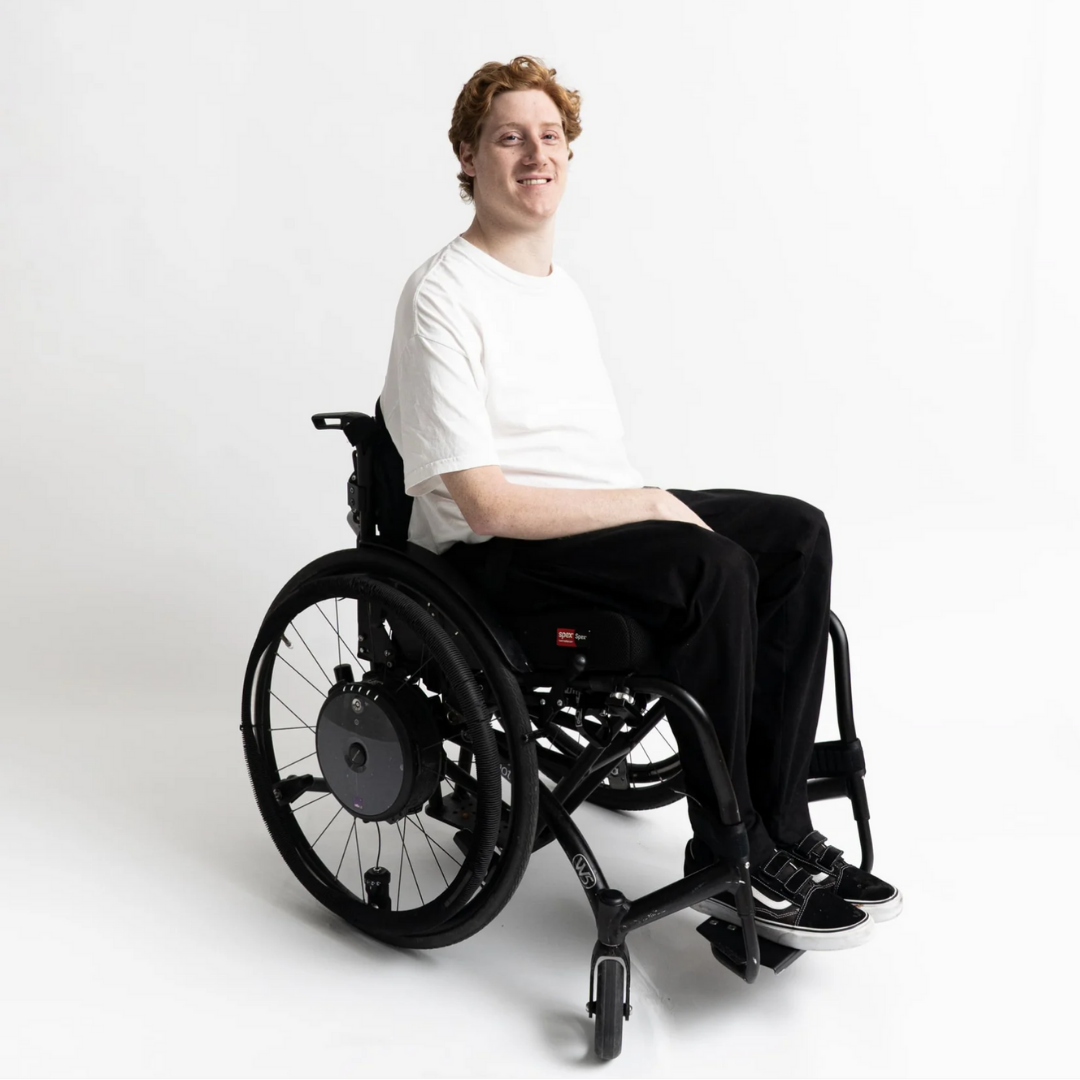
"They were the two main things that I wanted to hit, because there were adaptive clothes on the market already, and there’s obviously fashionable clothes designed to for able-bodied people, and you could only pick one of the two.
If you think of the term adaptive fashion, it just blends the two principles of adaptive features and being fashion forward – it's more of an all-encompassing term of what the product is."
Lachlan used a pair of pants that he already owned as the blueprint, and together with his friend, they worked on developing the adaptive features first.
Fabric was a big part of the design process. They initially worked with an ethical manufacturer in Bali, but have since swapped to a family-run ethical manufacturer in China, as the Bali manufacturer could only work with light fabrics.
“I was trying to get a soft fabric that sat really well, especially when you’re in a chair,” Lachlan explained, “Fabrics like linen don’t sit very well because they’re a bit too thin, but something like a canvas workwear material is a bit too hard for sitting on all day.”
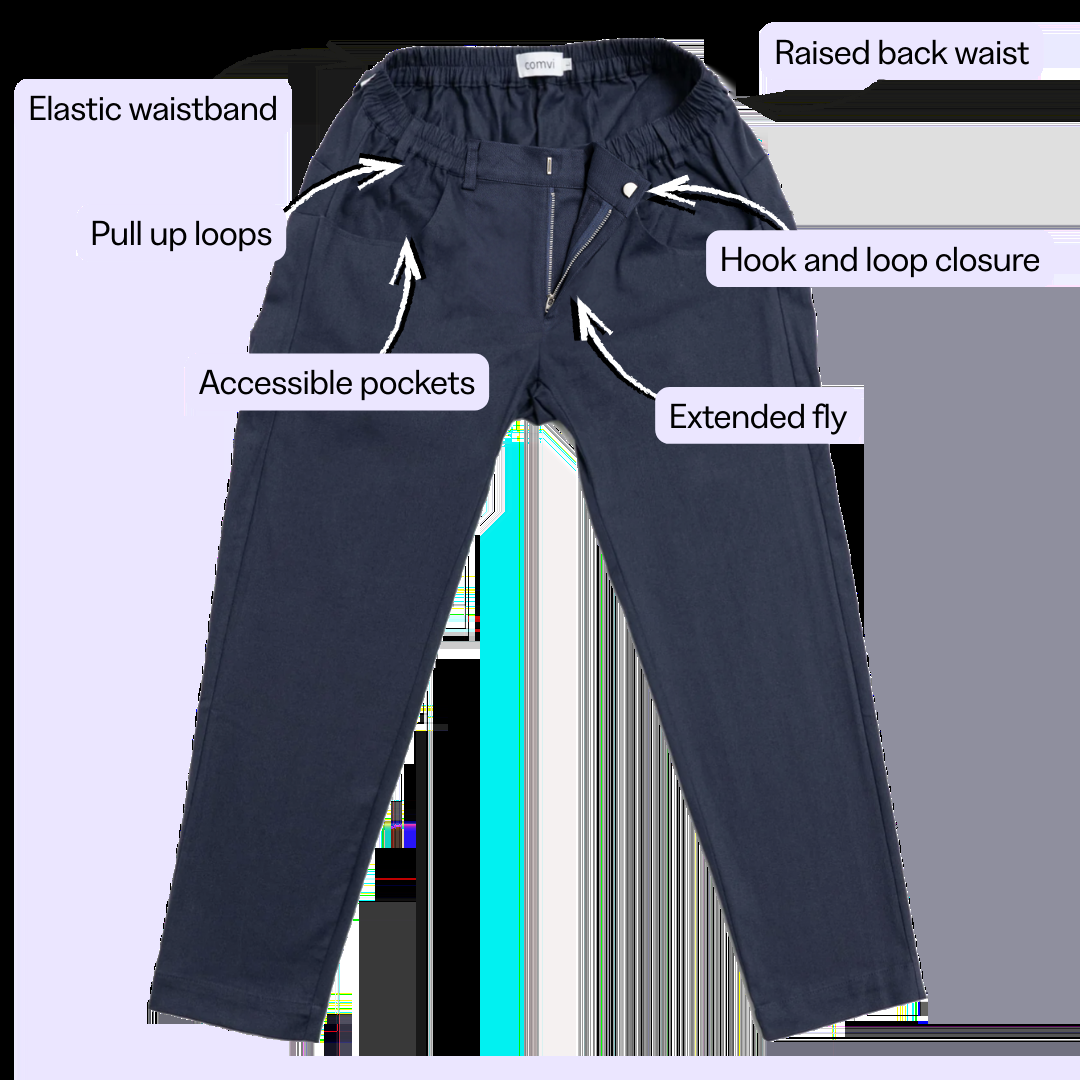
It was important to Lachlan that the pants have accessible features that could suit everyone, from elastic waistbands and a raised seam-free back to accessible pockets, an extended fly, and pull up loops. Each feature has a specific function designed to support wheelchair users to wear them.
“They’re important because not every wheelchair user is going to use every single one of the features,” Lachlan said, “A high para🛈 (quadriplegic): a person who has an upper spinal cord injury, usually impacting both arms and legs isn’t going to be using the pull up loops, but a low para🛈 (paraplegic): a person who has a lower spinal cord injury, usually impacting both legs will be using the pull up loops, and so being able to add as many features without ruining the silhouette or the fashionability of the product was important.”
Once they had the pattern down for the accessible features, Lachlan and his team began talking about making the pants more fashion forward.
“[Balancing function and fashion] was part of the design process,” Lachlan explained, “I just wanted all the features to work properly, I wanted to have a harmonious product where nothing clashed, and you didn’t have to sacrifice one thing for another.”
Lachlan started off with pants and shorts in plain silhouettes, in neutral colours such as black, navy, and tan, but he’s hoping to expand into other colours and even other types of clothing in the future. Comvi’s pants are specifically designed to be dressed up or dressed down, which in itself is an accessibility feature, reducing the number of times someone has to get changed. Instead, they can go from work to the bar without having to change their pants.
"The intent is that I want everything to stay as a capsule wardrobe, because I don't want to make clothes that people can't wear every day.
I'm not a fashion brand, but I want people to have that ability to dress things up and down and make it their own, give them a blank canvas that they can express themselves in any way they want."
Comvi has also recently released a new type of pants: jeans. Jeans are notoriously difficult pants to put on and wear, particularly for wheelchair users.
“I didn’t wear jeans for 10 years because it just seemed like such a far-fetched idea – every time you look at them, they’ve got a button or a press stud, or stitching on the back pocket,” Lachlan said, “Everything about jeans was intimidating to wear, and so I needed to make mine the least intimidating...so I’m very happy about the way they turned out.”

"My brief to myself was the ‘jean that jeaned’. I had this vision for a jean, and that’s all I wanted."
Making a pair of jeans that are accessible is no easy task, and so Lachlan went over every single detail to make sure that there were no unnecessary buttons, stitching, or other design choices that you might usually see on jeans – like rips and fading, for example.
“I didn't want rips or fading on the knees because you wouldn’t need that in a wheelchair because you’re not on your knees!” Lachlan explained, “That’s the kind of careful little design choices that I made.”
For Lachlan, the most rewarding part of starting his brand is knowing that his product has made a difference – not just for himself, but for others. He spoke of a customer who has come back to Comvi three times to buy pants and shorts in different colours because he loved the product so much.
"He’s given me some feedback on the pants that I’ve made, and when the shorts came in, I asked him to give me his thoughts because I trust his opinion. He sent me a really nice email and said ‘This is the first pair of shorts that I don’t get autonomic dysreflexia from. This is the first piece of clothing that I’ve worn that I can do a car transfer without them coming down.’
That was the best thing, knowing that he can get in and out of a car and not have to readjust his shorts, knowing that he can live his life without having episodes of autonomic dysreflexia… that is probably the nicest thing.
It’s knowing that I made a product, I worked so hard for that, like I envisioned would help people, but knowing that and having the actual tangible proof that all those thoughts that I’ve had for two to three years eventuated, and have made a difference.”
For the wider community, and particularly for us here at Indigo and NED, where championing independence is our key goal, the development of brands like Comvi further demonstrate why supporting assistive technology and products made by disabled people, for disabled people matters — because it helps people shape solutions that actually fit their lives, and with Comvi, the solutions don’t just fit, they look fantastic too.


